
CPA vs Controller AlternativeWho keeps the books and the return
An accountant usually files the return in March. A controller is the person who closes the books each month, while October can still change a wage or a purchase. Steven Palmieri, a Tax CFO and the Entrepreneur's CFO, keeps the books, sets payroll up, prepares the return, and hands you the statements and a plan for the rest of the year.

Tell us about the books

You will be talking to the Steven Palmieri practice.
Say whether the books are still open, and whether a return is already in draft.

Who does which job
The CPA signs the return and the attest work, once a year. The month stops with the controller, and the dates stay written on that month. October still has room for a wage, a purchase, or an estimate to change what the year owes. The Tax CFO reads the closed month in October and tells you what the year can still be. Steven Palmieri does the second and the third, and prepares the return from the same months.

March is handled. October is not.
Someone prepares the return. Nobody tied the bank in October or said the year still had room to move.
Click to see the gap ›Tap to see the gap ›
A controller closes the month.
That is the job: bank tied, sales tax set aside, the month finished on the same day. It is the part most small companies never had.
Click to see the close ›Tap to see the close ›
A CPA signs the filing.
The license covers the return and the attest work. It does not cover whether anyone read October.
Click to see the filing ›Tap to see the filing ›
One practice does both jobs
Steven Palmieri keeps the books, sets payroll up, and prepares the return from a month that has already stopped.
Click to see the practice ›Tap to see the practice ›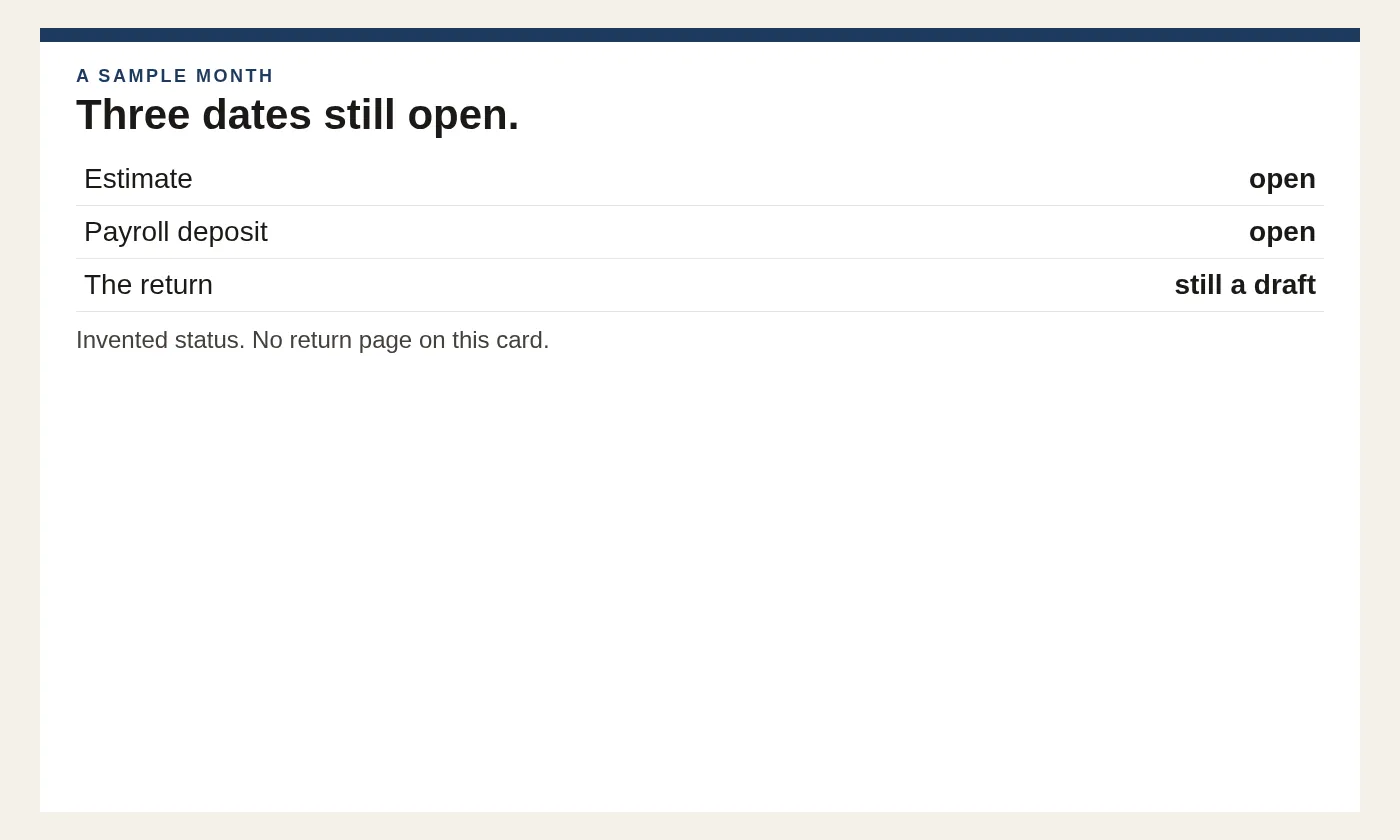
A sample month with three dates
A notice, an unpaid estimate, and a draft can sit in one pile. The amounts stay off this page.
Click to see the sample ›Tap to see the sample ›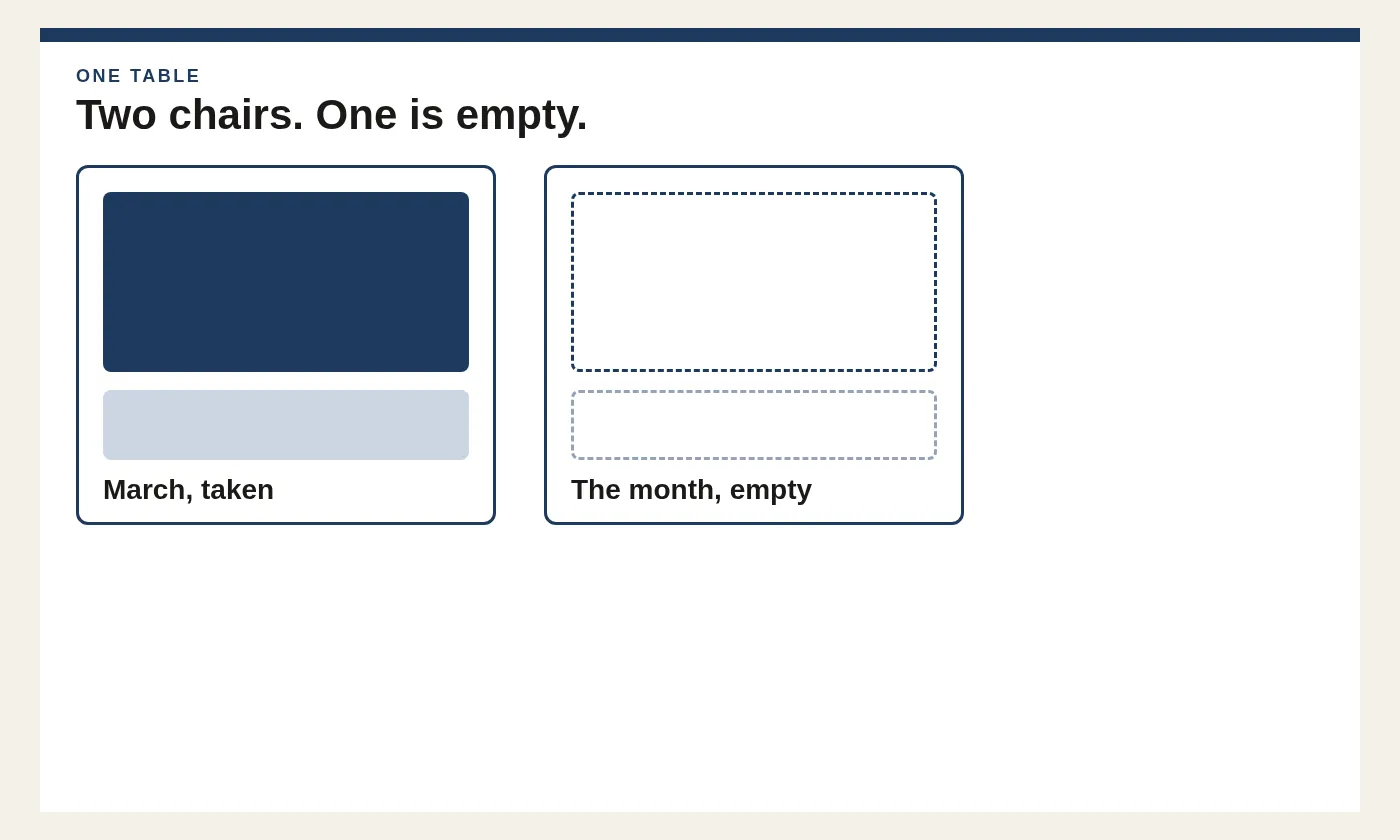
One month, both jobs
The dates and the return can come from one Tax CFO month, after the books have stopped.
Click to see both jobs ›Tap to see both jobs ›Six dates owners mix up
Open a row and the note says where that date belongs.
1Sales tax set aside Stays on the close
A state's usual sales tax day can pass while a return is still a draft. The money stays beside the finished month, apart from the signature.
The close and the return stay together here.
2An estimate still due Stays on the close
An estimate for the year can fall due while the return is still a draft. That voucher stays with the finished month, apart from any signature.
The close and the return stay together here.
3A payroll form still open Stays on the close
A quarterly payroll form can sit open while the return is still a draft. The deposit stays on the provider's calendar, with the finished month.
The close and the return stay together here.
4A return from a closed month Stays on the close
Preparation of the return waits until that month has stopped. An open month makes the return a guess we will not sign our name to.
The close and the return stay together here.
5An attest report Send to a signer
When the letter says audit, review, or compilation, we name it and the signature leaves this practice. That handoff is said before anything else.
That signature leaves this practice.
6Payday after setup Stays on the close
We set the provider up. You run payday after that. The deposits stay on that provider's calendar, not on a second one we invent.
The close and the return stay together here.
From Steven Palmieri.
The reading at the end of the year

What an open month feels like
Steven Palmieri, the Tax CFO, reads the closed month. March can already have a preparer while October never had a conversation.
The confusion is which person should have spoken while a wage or a purchase could still change the year. Owners feel it when March is covered and October was never opened. We start with the month that never got a conversation, and we say so before anyone talks about a signature.
What a controller finish looks like on a real calendar
Owners use the word controller for the person who makes the month stop. The bank, the checkbook, and the books have to say the same thing. Sales tax that was collected is set aside from money you can spend. What the company still owes, and what customers still owe the company, is written down. Draws the owner took are not hiding inside wages.
That finish is a set of dates you can point to on a calendar. Estimated tax for a calendar year owner lands on April 15, June 15, September 15, and January 15. A quarterly payroll form follows the provider's own due days. Sales tax that was collected is set aside on the state's own calendar, which you confirm on that state's page rather than from memory. A return can still be a draft while any one of those is late. The sample May on its own page keeps the amounts off and shows only the shape.
If your notice names a day, that day is the one we start with. If the notice has not arrived, tell us the day you remember, and we leave every dollar off the page until the books show it.
The bank tie, the sales tax set aside, and one sentence about what October can still change are the three pieces a small company usually never had. Most owners had the return and not the month. The license covers the return and the attest work. Reading October is a separate job. Steven Palmieri, the Tax CFO, does that reading on the closed month.
What owners usually mean by the return
In an owner's mouth the return is the signature at the end of the year, the appointment in March, the person who files. That job is real. It is also late in the story. The numbers it uses are the months that came before it. If those months were never tied to the bank, the return is a story with a cover page.
Preparing the return is work this practice does, from a month that has been closed. Representation at a hearing is a different job and it leaves. A report that assures a reader about the statements is a different job and it leaves. The page on the license walks that line without a sneer at the people who hold it.
The useful question is smaller than the title on the door. Which date is already true, and which date is still a draft. Answer that and the rest of the comparison gets quiet.
A sample month, with the amounts left off
Picture a May that is not a client. A sales tax notice is already in the pile. Nobody paid the estimate that was already due. A draft return is a file on a screen, waiting on a month that is still open. No company is named. No dollar is printed. The shape is enough.
The notice and the draft can sit in the same stack and still be different kinds of late. One is a date the state already marked. The other is a signature that would be early. Closing the open month is what lets the draft become a return. Pointing at the notice and hoping is not.
The longer version of that May stays on its own page, with the amounts still left off, so you can hold your own pile up beside it.
What we hand you after the month stops
A closed month. A short list of the federal dates that month touches. If you also want the return, we prepare it from that finished month and from no earlier guess. A plain sentence when a letter is asking for a signature we do not give. Payday set up on a provider you keep running, if that is the open job, and then left with you.
Financial statements can be prepared. They leave without report language. The statute's safe harbor wording is copied when a statement has to carry it, not shortened into a slogan. The October read, while the year can still change, is part of the same month. Estimated taxes, a wage for an owner who works in an S corporation, and a purchase placed in service are easier then than in April.
You can read the dates page, the license page, and the federal dates note and leave. The reading still counts. If the dates are already true, we will say you do not need anyone new.
One sentence above the form is enough. Name the date. We will say whether this practice is the right place for it.
Bring the date that is late
You will be talking to the Steven Palmieri practice.
Tell us which date is late, and whether a return is already in draft.