CPA vs Controller AlternativeThe federal dates beside the return
An estimate, a payroll deposit, and a sales tax set aside can all be open while a draft return looks finished. A signature does not pay them.
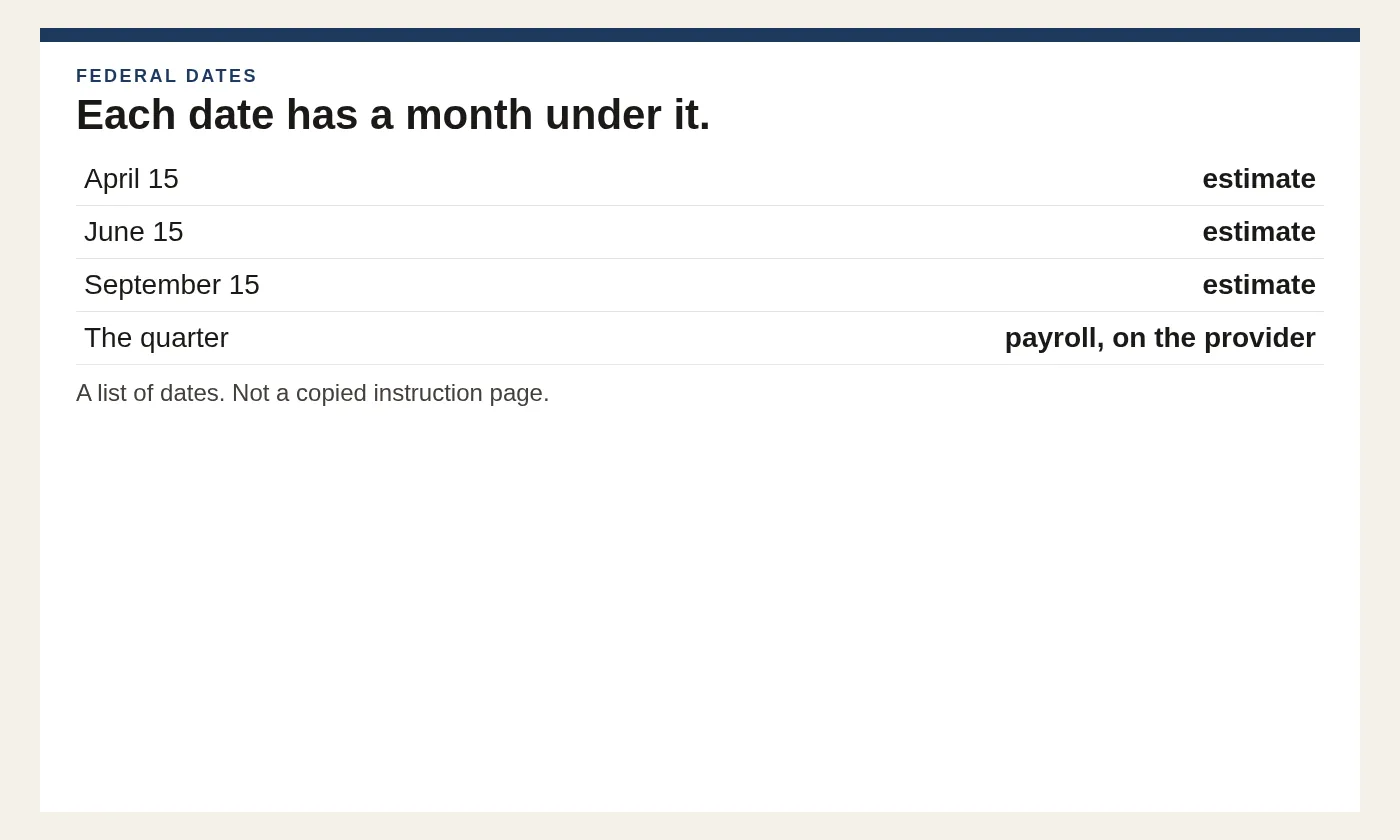
The dates, with the year beside them
Estimated tax for a calendar year owner lands on April 15, June 15, September 15, and January 15. A calendar year corporation often uses December in place of that January date. The instructions for Form 1040-ES are where you confirm the year in front of you. A safe harbor, when the instructions allow one, is last year's tax, or the higher amount those instructions name when income jumped. This page does not print a dollar of your tax. Your books do that.
Form 941 is the quarterly payroll return, and the deposits that feed it live on the provider's own calendar. A quiet quarter still has a form. Leaving the deposit inside the operating account is a different kind of late from a signature at year end. The income tax return does not make that deposit.
What extra time to file really buys
Many companies ask for more time with Form 7004. An individual often uses Form 4868. Extra time to file is not extra time to pay. The tax that is already due still wants a payment on the original day. Confirm the form that matches the return on the IRS page for that year. We do not reprint a shifted day from memory.
A notice for a late deposit or a missed voucher names its own percent, and that percent moves. It stays on the IRS page for the form that is late. It is not copied onto this one, because a copied percent goes stale and then scares the wrong year.
Why this sits on a comparison site
Owners compare a controller with a CPA and then miss a federal date that is neither an audit nor the signature. The date is tax work. It is fed by the books. It is not an attest report. Paying the voucher from a closed quarter, filing the payroll form, and preparing the income tax return can sit with the same month.
April is when the first estimate and a lot of returns land in the same week. The week can feel like weather. A crowded April week does not push an estimate off its own day. Extra time is a form, on the IRS terms, and only for the filing. The payment is a separate act.
A sole owner who files on a personal return and a company that files on its own return are not the same pile. Bring the entity question and we will open the IRS instructions beside you. We will not guess your return from a domain name.
A signature on the income tax return does not pay the voucher and it does not deposit the payroll tax. A close that never lists those days leaves them to memory. Memory is how a notice arrives in a year the return was signed on time. The close should carry the voucher the way it carries the sales tax set aside. Put the tax year next to the date, and do not mix last year's instructions into this year's sentence.
Bring the voucher that is still in the drawer, or say you never printed one. A year can have the April estimate paid and the September estimate blank. The blank one is the date. The paid one is not a credit you invent on this page for the blank one. The IRS instructions are where a credit, if that year allows one, gets worked out. We open those instructions beside the closed month. We do not slide a June payment onto September because both are called estimates.
A payroll deposit and Form 941 are easy to treat as one chore. The deposit is money that left the bank on the provider's day. The form is the quarterly report of those deposits. One can be finished while the other is still a draft. A close that checks only the form can miss a deposit that never left. A close that checks only the bank can miss a form the provider never filed. Both belong on the same list, on different lines, with the tax year written beside each line.
When the income tax return and the first estimate land in the same April week, owners often pay one and leave the other. The return's payment and the voucher are different checks. Extra time on Form 4868 or Form 7004 covers the return. It does not cover the voucher that was already on the calendar. Write both on the note you send. A sentence that names only the return leaves the voucher in the drawer, and the notice that follows is about the voucher.
