CPA vs Controller AlternativeHow these pages are made
Where a page on the dates comes from
Write the late date first. That is the rule these pages follow. The close is told before any talk of a signature, because signing an open month would be a guess. A threshold or a due day shows up only in a sentence that also names the IRS page, or the agency page that printed the day, and the tax year. Software may draft a paragraph. A person at this practice reads it against the month before it is allowed to stay. No public page, no figure. When a line is wrong, phone the footer and say which page carried it.
Work order is page order. Close, then dates, then the return. A statute that draws a line is cited and then left alone. No real company's papers are hiding on this page under a blank name.
Software can produce a draft. A person does the reading. The number in the footer is how that person is reached. Street and mailbox are omitted on purpose.
What a number has to bring with it
The office that published it
Rates, thresholds, and due days travel with the office that printed them. An average that belongs to someone else stays labeled as theirs. A number remembered from a phone call is not promoted into a sentence. If the office that printed a number cannot be named, that number stays in the notebook.
How a page gets to stay
First the figure is tied to the office beside it. The second reading checks every claim on this page against the signature line below. Then any example that only works if a real company's file is hiding inside it is thrown out. What you see is only an outline of how a month can be arranged. They are not a request that your month look like the sample.
A kitchen table, a closed shop, or a notice on the counter named here is the owner's own moment. The name is not a claim that we were standing in that room. Responsibility is the footer, and the footer is on each page.
A bad figure is fixed in place
The wrong number is replaced or deleted on the page that carried it. The bad figure is not rewritten into something blurrier. Phone the number under the mark, name the URL, and the person who reads the month will replace the figure.
What this practice does not sign
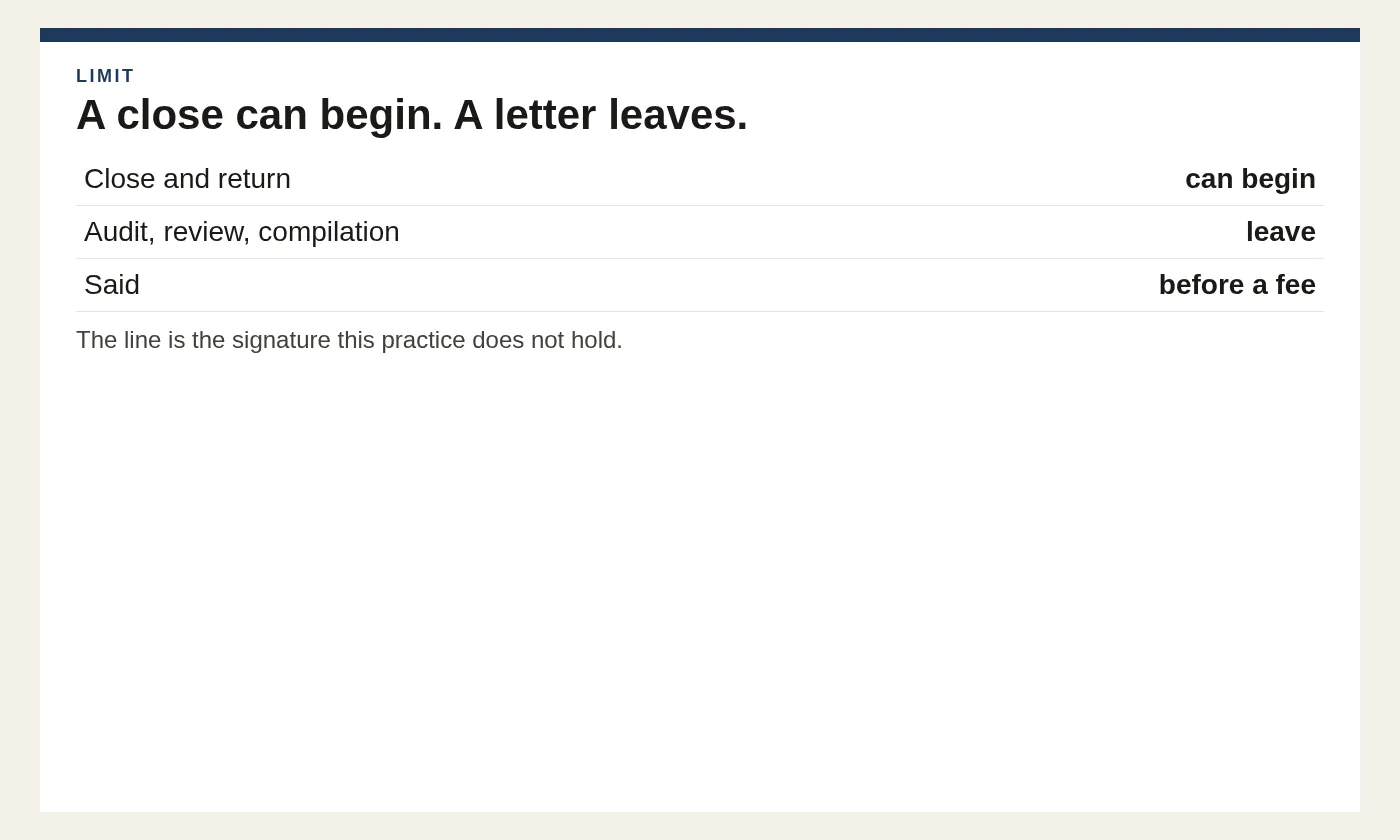
Finished months, the federal dates that sit on those months, and a return prepared from the numbers. That is the work. Steven Palmieri is not a CPA. The three reports a reader can receive on the statements are an audit, a review, and a compilation. This practice does not make that signature. A letter, a lender, or a contract that asks for the report is named on the first call and sent to a firm allowed to sign it.
A payday provider can be set up here. After that, the company runs payday. This practice does not run it, and it does not appear at a hearing. A notice can be read. Records can be gathered. The hearing needs its own representative.
Statements may leave with plain wording that promises no assurance, and with no report attached. A lender that asks for a review or an audit is asking for a signature this practice does not make, and that signature stays with a firm allowed to give it. The state statute that draws that line is gathered for owners who file where this practice sits, and this page keeps the plain version.
An open month is either repaired or declined, and that is said before a fee is quoted.
Who stands behind the footer
Services on this site are provided by Steven Palmieri, Dallas, Texas. The direct line is +1 844-324-7273. It is already in the footer. The same people who would close the month can prepare the return the year lands on, when you want both.
No building number is printed, and no mailbox either. The structured data repeats the words already on the page and adds nothing private.
Owners who are not in the same room meet by video, with the books shared. A lobby in your town is not required. The footer is the responsibility line, repeated because every page should carry it, not because the interior pages need to retell the tour. The month can be read on that call from the statements you already hold.
One practice, more than one address
Other addresses from this practice are about other jobs. Someone who came to compare a controller's finish with a return should not land on a page about a different service. The footer names the practice, and the number is the same one. The hub is stevenpalmieri.com. The link is on this disclosures page only. This disclosures page does not hand you any other URL from the practice.
Keeping the doors separate lets this URL stay with the dates, the close, and the return that follows a finished month. The other doors write their own lines. These pages leave those lines where they are.
What holds after the reading
Those limits stay. If a line would require a signature we do not make, that line is never published. The footer number reaches this practice. A known mistake is corrected on the page that had it.
These pages do not choose your entity, set your payday, or prepare your return. The same fact lands differently on different companies. Read a sentence that would change a filing against the notice you actually hold before you rely on it. If a sentence here and a notice in your hand disagree, use the phone.
Bring the date that is late

You will be talking to the Steven Palmieri practice.
Name the date. The reply will say which pile that date belongs in.