CPA vs Controller AlternativeWhich job needs a license
The license is for a report on financial statements. The dates, the close, and the return are a longer list, and they do not become true because a license is in the room.
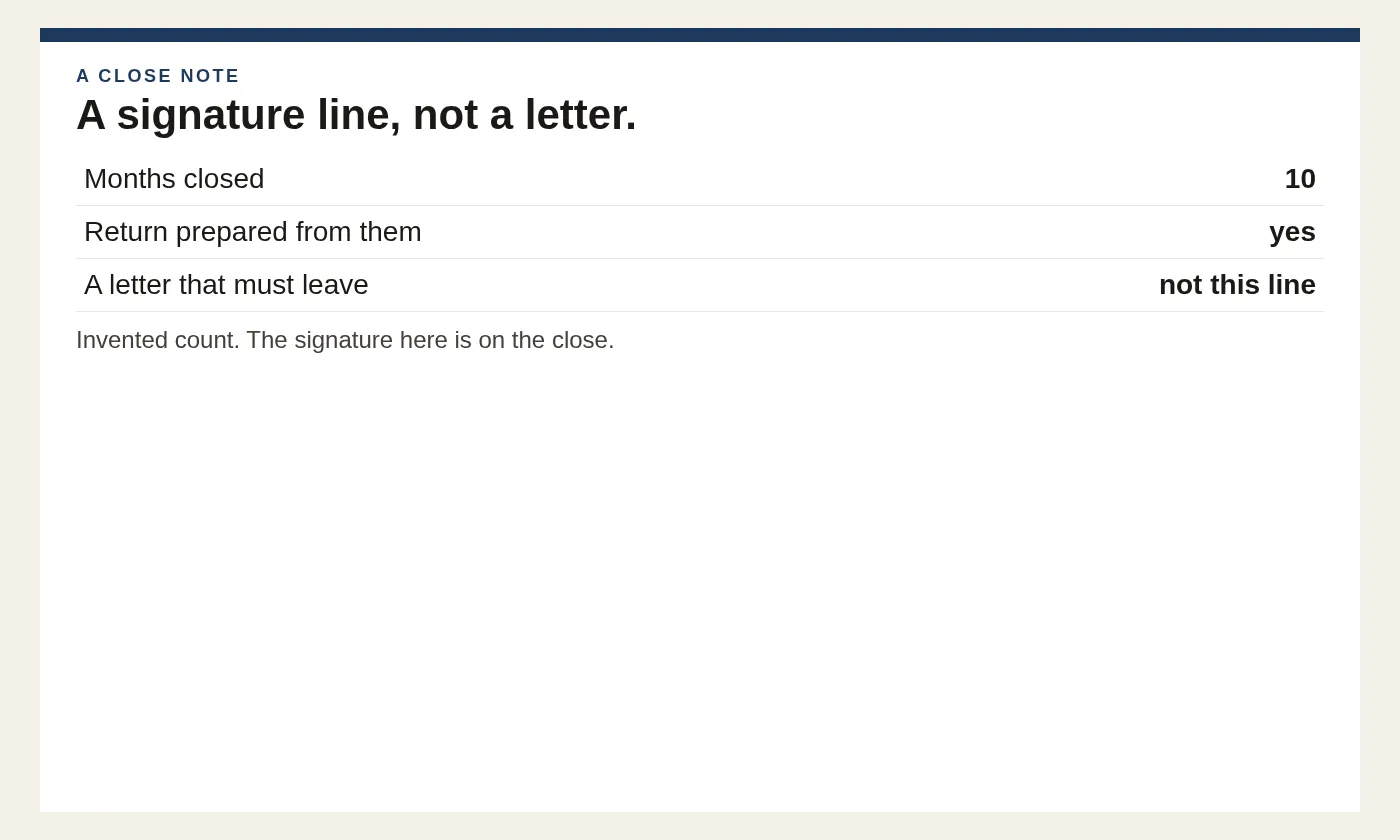
What a signature actually covers
A report on another person's financial statements, and the other attest work that travels with that report, belongs to a firm allowed to sign it. Preparing financial statements, preparing tax returns, and giving management advice can still sit here. The prepared statements may not borrow the report language those firms use. When a statement has to leave the office, it carries plain wording that promises no assurance, copied in full, not trimmed into a slogan.
Titles are a separate muddle. This practice does not use a title that pretends to be a state license, and it does not borrow the abbreviations that license uses. The public name here is Tax CFO. Steven Palmieri is the Entrepreneur's CFO. That is a management description. The license is a separate permission, and this sentence does not stand in for it.
Picture the letter on the kitchen table, the one that asks for a signed report, sitting next to a calculator that already tied the bank. A bank that already matches the books is still not the signature a lender letter is asking for. The report is what needs the firm that can sign. The tie does not hand that signature over.
What owners mix into the same word
Someone says CPA and means the person who files. Someone else means the person who could sign an audit. A third person means an enrolled agent who can speak at the IRS. Those are three different permissions. Unlimited representation before the IRS sits with an enrolled agent, an attorney, or a person who holds a state license. A preparer tax identification number lets a person prepare a return for pay. Representation before the IRS, and the state license, are separate permissions. This practice does not print a credential it does not hold.
A hearing, an appeal, and Form 2848 go to someone who has that representation. We can still pull the records a notice asks for and shape the reply to a document request. The hearing itself is named and handed onward.
No sneer at the people who sign
A person can hold the license and also close a month. The license is not what makes the dates true, and the dates are not an insult to the license. If your letter asks for the report, you should hire the person who can sign it. If your letter asks which date is late, that conversation can start here.
The longer boundary, including the one sentence about what Steven Palmieri does not hold, lives on the disclosures page. This page is the map. That page is the line.
A reader who wants the federal side of representation can open the IRS pages for enrolled agents, for Form 2848, and for a preparer tax identification number. This page does not paste a safe harbor paragraph. When a statement has to carry plain wording, the wording is copied whole onto the statement, not shortened into a slogan here.
The practical split on a call is smaller than the statute. If the letter says audit, review, or compilation, the work leaves. If the letter says the sales tax day passed, or an estimate was never paid, or the payroll form is still a draft, the work can start. Those are dates. Dates do not become an attest report because they sit near a tax return.
We will also say when the letter is ambiguous. Some lenders use the word compiled when they mean a spreadsheet. Some use audited when they mean a tie to the bank. The first conversation asks which document they will actually accept. Guessing the stricter one wastes a month. Guessing the looser one wastes the relationship with the lender. The question is the document, not the mood of the letter.
