CPA vs Controller AlternativeTwo words for two different jobs
When an owner says accountant, the March filing is usually what they mean. When they say CFO, they mean the person who should have spoken while the year could still change.
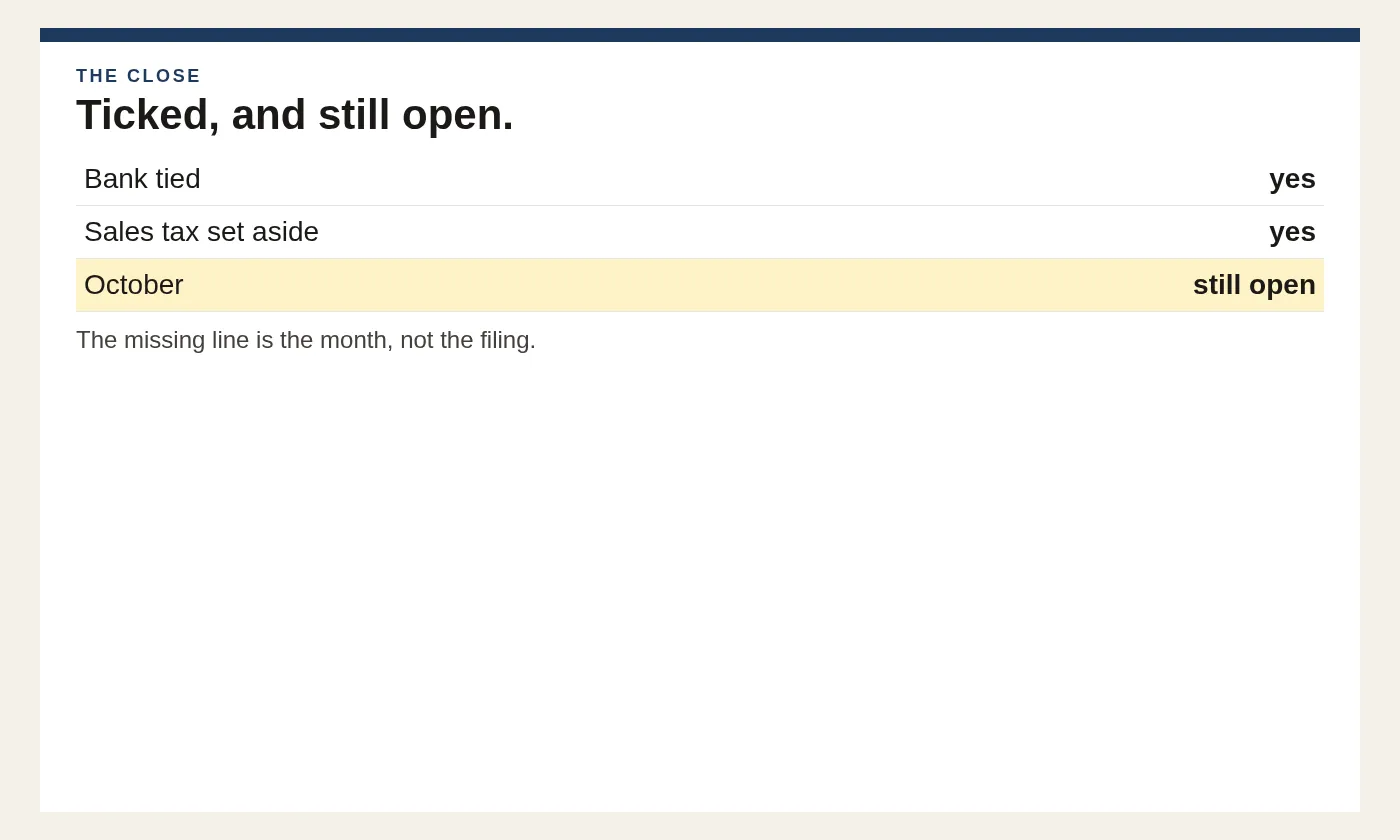
The missing middle is the finished month
Career pages stack the words like a ladder. Accountant on the bottom, then a controller, then a CFO on top, with a salary beside each rung. That ladder is not how an owner talks. The owner already has a person for the filing. What feels late is the month. Nobody tied the bank. Nobody moved the sales tax money. Nobody said, in October, that the year still had room to change.
Picture the shop after close, lights off, the week's receipts still in a drawer. The room can be quiet and the week can look finished while last month is still open. The close is a tie between the statement and the books. Owners feel that difference in October, when a wage or a purchase can still change the year, and again in March, when the return reports what already happened.
The comparison an owner is actually making sets the March filing beside the finished month. Both can be true at once. Both can be late. Each lateness has its own date, and the call starts with the one that is already marked.
What the October conversation is for
October is still inside the year. A wage for an owner who works in the company, a purchase, an estimate, a draw that has been treated like pay, can still be looked at. April is a different room. By then the year has already happened and the return is a report of it.
We read a closed month with you and name what can still move. A month that is still moving is not something we will label a plan. If the books are open, the first work is the tie to the bank, the list of what customers still owe, and the list of what you still owe. The forward sentence comes after that. A letter that asks for an attest report is named on that same call and sent to a firm that can sign.
Publication 583, the IRS recordkeeping guide, says to reconcile the bank statement, the checkbook, and the books, and to do it each month. That monthly tie is what we mean by a close. We mean those three records saying the same thing, in the same month. A tie that is a quarter stale gets finished before anyone talks about the shape of the year.
Where a third person still belongs
If the letter on the table asks for an audit, a review, or a compilation, that signature is not made here. That opening conversation identifies the letter and moves it to a firm able to sign. Months that already tie can sit where they are. Books, a prepared return, and the October read do not require that signature.
When payday is the open job, we set the provider up and you keep running it. Payday stays yours once the provider is in place. The deposits stay on the provider's calendar so Friday does not depend on a month that has not closed.
The October read is the conversation the filing cannot reach backward and do.
